I've gazed beyond the ledge.
Reflections on identity, taste, and the what lies ahead.
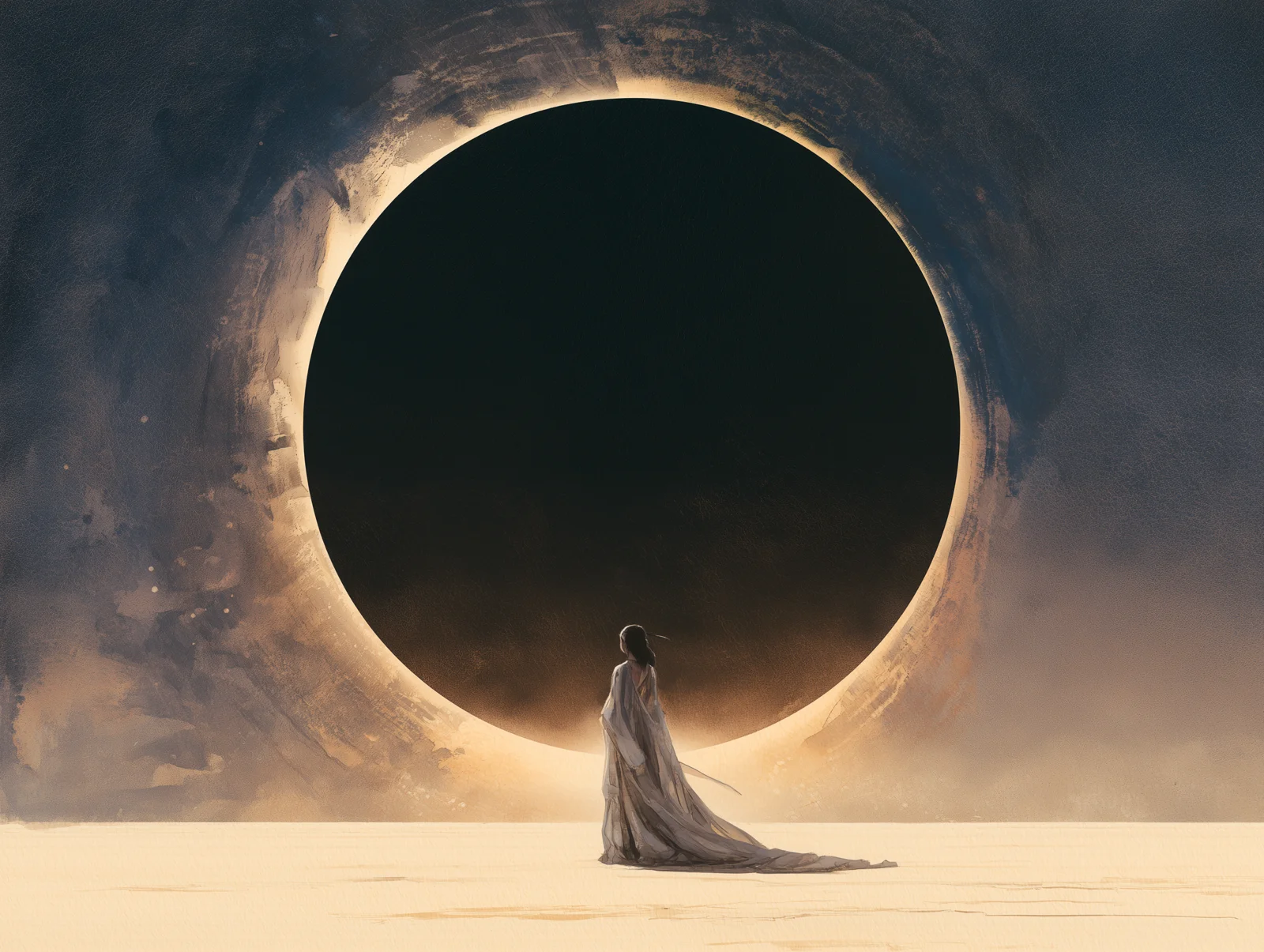
Humans crave identity and status. We collect items, titles, currency, land, and even knowledge. Some of these have historically been gatekept by the rich and the powerful, the pretty and privileged. We have prided ourselves on these distinctions, adorning ourselves with titles and accolades that exclaim to the world around us: look at me! This is who I am. This is what I am!
You are not a human who has studied and trained in computer science —you are a software engineer.
That title is elegant. It holds status and gives off some amount of mystique that clouds laymen into believing you harness some arcane power over machines.
But that title has become a thin veneer.
And it is eroding at an unprecedented rate.
Replace software engineer with whatever title is relevant in your life.
How material is it? Is it granted by some governing body? Sanctioned by an elite group or university? Or is it so fundamental to your being that stripping it away would leave behind a different person?
I have witnessed the rise of machines of unimaginable sophistication.
Machines so beautifully capable of complex thought and reasoning that they both amaze and terrify me.
These machines have forced me to reckon with my entire identity—to challenge who I am, the path I have taken, and the road ahead.
And while they have demonstrably proven to deliver immense productivity gains and near infinite mental horsepower, it has elevated something to a new pedestal.
Taste.
Most of my career has been built around the enormous moat of execution—the vast distance between imagining something and creating it. Ideas have been plentiful, but execution scarce.
Execution has required knowledge, and knowledge has required thousands of hours learning, failing, and improving. A beautiful cycle that created enough distance between I want this to exist and this exists to form within the gap.
With these machines, that distance is collapsing.
What takes you a week now takes a machine minutes at currently available compute.
Software is simply the flashpoint.
When creation is no longer the constraint, knowing what is worth creating is.
As the space between intention and reality collapses, the question changes.
No longer: can you build it?
But: can you imagine a future worth building?
If you made it this far, thank you for reading. I’m trying to become a better writer, so if you have a thought on the piece—or on the writing itself—I’d genuinely appreciate hearing it.